Feel It, Film It, Share It: How Nashville Brands Are Building Print Experiences That Customers Can't Stop Recording
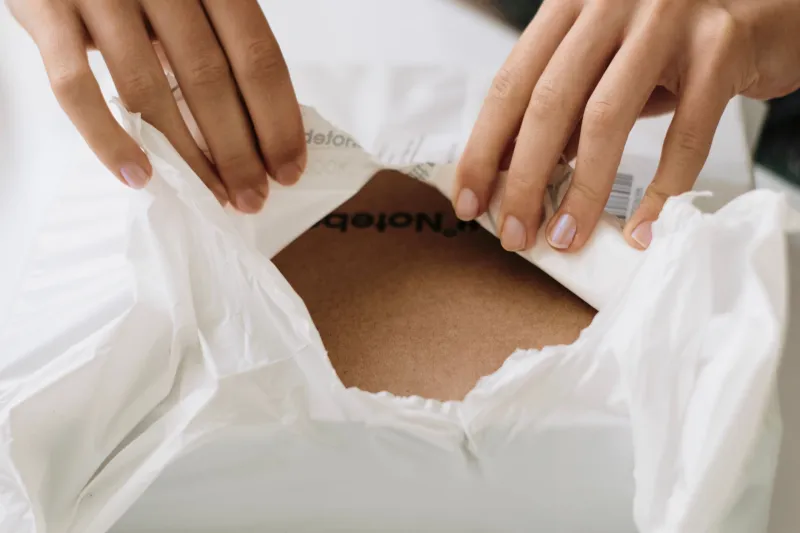
There's a moment that happens when someone opens a really well-designed package. Their hands slow down. They tilt the box toward the light. They run a thumb across the raised lettering on the card tucked inside. And then — almost involuntarily — they reach for their phone.
That moment isn't accidental. For a growing number of Nashville brands, it's engineered.
We're in an era where the unboxing video has quietly become one of the most powerful marketing formats on the internet. YouTube unboxing content generates billions of views annually. TikTok and Instagram Reels are flooded with customers cracking open packages, reacting in real time, and showing their followers every layer of the experience. And here's the thing most businesses miss: the brands that show up most in those videos aren't necessarily the biggest ones. They're the ones that thought hardest about how their print and packaging feels.
Why Aesthetics Alone Don't Cut It Anymore
For a long time, the conversation around packaging design stopped at visuals. Does the logo look good? Are the colors on-brand? Is the layout clean? Those things still matter — a lot, actually — but they're table stakes now. Every decent brand has a decent-looking box. What separates a forgettable package from a filmed one is the sensory layer underneath the visual.
Think about the last time you genuinely loved opening something. Chances are it wasn't just pretty. It probably had weight to it. A texture that surprised you. Maybe a subtle scent when the tissue paper unfolded. That combination of touch, smell, and visual detail creates what designers call a multi-sensory experience — and it's exactly what makes a customer stop scrolling through their phone camera roll and hit record instead.
At Nash Prints It, we've been watching this shift happen in real time across Nashville's small business community, and the brands leaning into it are seeing returns that go way beyond what a paid ad campaign could deliver.
The Tactile Advantage: What Your Hands Tell Your Brain
Here's a little neuroscience worth knowing: touch activates a different part of the brain than sight. When someone physically interacts with a textured surface — a soft-touch matte finish, debossed lettering, a rough-hewn kraft paper wrap — their brain registers it as a more meaningful experience than simply viewing it on a screen. That elevated perception of quality translates directly into how they feel about your brand.
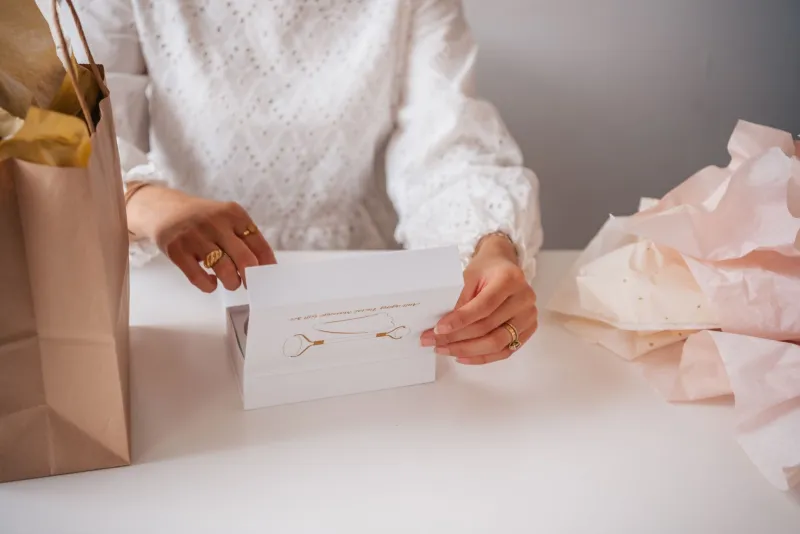
Nashville boutique skincare brands have been early adopters of this thinking. Packaging with linen-textured outer wraps, embossed logo seals, and layered tissue in coordinating matte colors doesn't just look expensive on camera — it feels expensive in the hands. The result? Customers film the unboxing because they want to share the experience, not because anyone told them to. That's earned media. And it costs a fraction of what a sponsored post would run.
The print techniques that make this possible — soft-touch lamination, spot UV coating, embossing, debossing, foil stamping — aren't new. But the strategic intention behind using them specifically to create shareable moments? That's a newer way of thinking about the print investment.
Scent as a Surprise Element
If texture is the most common sensory layer brands add to their print experience, scent is the most underutilized — and potentially the most powerful.
Scented printing has come a long way. Microencapsulated fragrance technology means you can embed a subtle scent into printed materials that releases when touched or scratched. Nashville candle companies, coffee roasters, and even real estate firms have experimented with scented mailers and inserts that reinforce their brand identity the second the envelope opens.
Imagine getting a mailer from a Nashville coffee roaster that smells faintly of roasted beans the moment you tear the seal. Or a candle brand whose packaging carries a whisper of their signature fragrance before you've even opened the box. That kind of sensory surprise is the thing people talk about — and film.
The marketing logic is straightforward: scent is the sense most directly tied to memory and emotion. If your packaging triggers a positive emotional response the moment it's opened, that feeling attaches to your brand. And if it happens on camera, it attaches to your brand for everyone watching, too.
Engineering the Unboxing Moment
The brands getting the most mileage out of multi-sensory print aren't just adding texture randomly. They're thinking through the full sequence of the unboxing — layer by layer — and designing each reveal intentionally.
A few principles that show up in the most shareable packages:
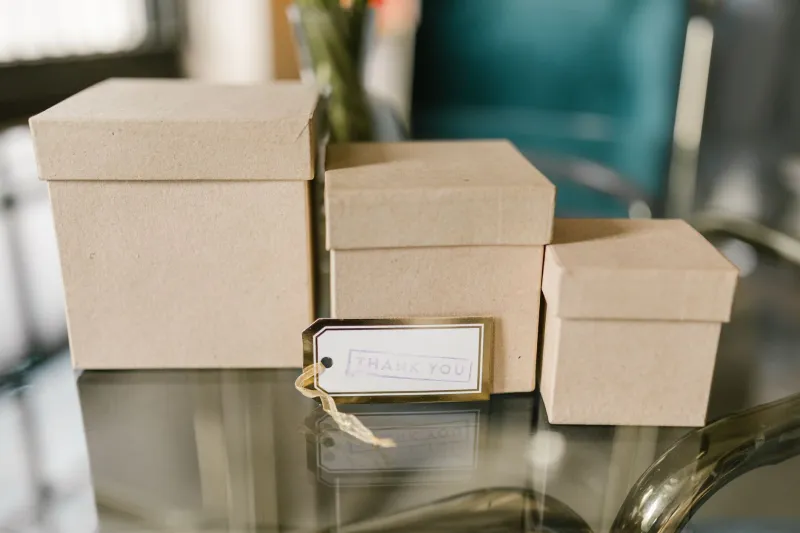
Contrast creates drama. A plain kraft outer box that opens to reveal a richly colored, soft-touch interior creates a reveal moment. That contrast between expectation and surprise is exactly what makes someone say "wait, look at this" out loud.
Paper weight signals quality. Flimsy tissue paper feels cheap even if it looks fine. Heavier stock, thicker cards, and substantial paper wraps all communicate that something valuable is inside — before the customer even sees the product.
The printed insert earns its place. A well-designed card with a personal message, printed on premium stock with a tactile finish, is the thing people hold up to the camera. It's small, it's legible on video, and it carries your brand voice directly into the content your customer is creating.
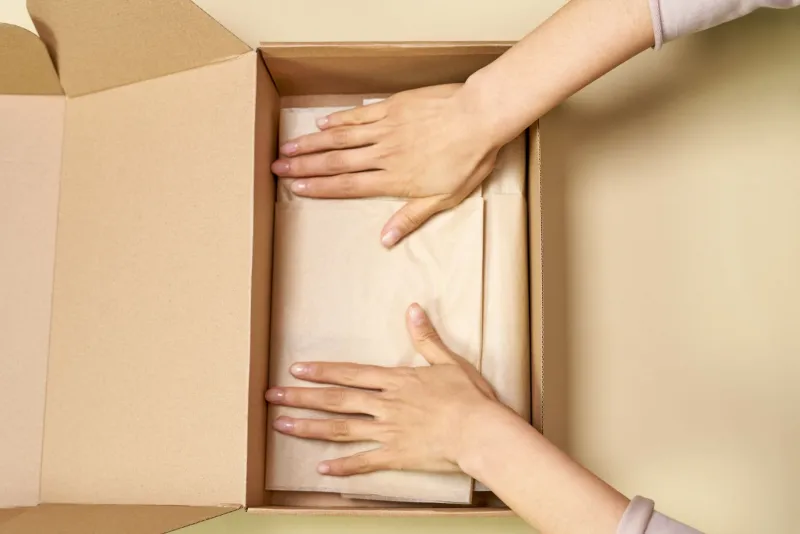
Layering slows the unboxing down. More layers mean more filming. Brands that wrap products in tissue, nest them in a fitted interior, and include a sealed envelope with the insert are giving their customers more to show — and more reasons to keep the camera rolling.
The ROI of Sensory-First Design
Here's the honest business case: sensory-first packaging costs more than a plain box with a sticker. That's just true. But the math changes when you factor in what you'd pay to generate the same reach through paid social.
A single unboxing video from a micro-influencer — someone with 5,000 to 50,000 followers — can generate thousands of impressions among an audience that already trusts that person's recommendations. Multiply that across dozens of customers who spontaneously film your package because it was worth filming, and you're looking at a content engine that runs on its own.
Nashville businesses that have made the shift to sensory-intentional print report that customer retention improves alongside the organic content generation. When opening a package from a brand feels like an event, customers look forward to ordering again. The print experience becomes part of the product experience — and that's a loyalty driver that no discount code can replicate.
Where to Start
You don't have to overhaul everything at once. If you're thinking about adding a sensory layer to your print materials, start with one element that aligns with your brand identity. A soft-touch finish on your business cards. A heavier stock for your packaging inserts. A textured outer wrap on your mailers.
Bring those ideas to a conversation with your print partner — ideally one who works with Nashville businesses and understands the local market you're trying to reach. The goal isn't to add texture for texture's sake. It's to create a moment that feels so intentional, so considered, that your customer wants to document it and share it.
Because in 2025, the best marketing your brand can get is a customer pointing a phone at your package and saying, "You have to see this."