Paper Beats Screen: How Nashville Restaurants Are Making Printed Menus a Brand Weapon
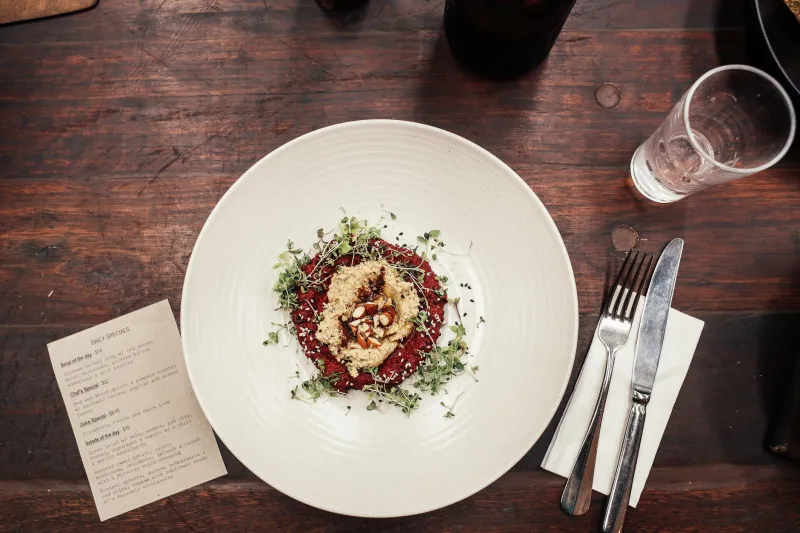
Somewhere between the pandemic pivot and the post-lockdown restaurant boom, QR codes became the default. Pull out your phone, scan a little square, squint at a PDF that wasn't designed for mobile, and try to order a cocktail you can barely read. It worked when it had to. But a lot of Nashville restaurateurs are quietly admitting: it wasn't great.
Now, printed menus are making a real comeback — and the reasons go way deeper than customer complaints about dead phone batteries.
The QR Code Hangover Is Real
Let's be honest. QR menus solved a problem during a specific moment in time. They were fast to update, cheap to deploy, and kept staff from touching shared surfaces. All valid. But as the dust settled, restaurants started noticing something uncomfortable: guests were disengaging. People were on their phones anyway — scrolling Instagram, texting, half-present — and handing them a digital menu just added to the noise.
A physical menu, on the other hand, creates a pause. It gives guests something to hold, something to look at together, something that exists in the actual room with them. That's not a small thing in the hospitality business, where atmosphere is half the product.
Several Nashville spots — from the honky-tonk-adjacent bars on Broadway to the upscale farm-to-table concepts in East Nashville — have quietly swapped back to paper, and their regulars have noticed. The feedback isn't complicated: it just feels better.
A Menu Is Marketing You Eat Dinner With
Here's the part that often gets overlooked in the printed-vs-digital debate: a menu isn't just a list of food. It's a brand document that sits in your customer's hands for ten to fifteen minutes. That's a marketing window most businesses would kill for.
Think about what a well-designed printed menu communicates before a guest reads a single item. The weight of the paper stock tells them whether this is a casual taco spot or a white-tablecloth experience. The typeface signals personality — playful, refined, rustic, modern. The layout guides the eye toward high-margin items. The color palette reinforces what they already felt when they walked through the door.
This is what designers call menu engineering, and it's a legitimate strategy. Studies have shown that where an item sits on a page, how it's described, and whether it's visually anchored can meaningfully influence what people order. A printed menu gives you full control over that experience. A PDF on someone's phone? Not so much.
Durability Doesn't Have to Mean Boring
One of the old knocks on printed menus was the wear-and-tear problem. Laminated menus from the early 2000s looked rough after six months of handling, and nobody wanted to be the restaurant with the sticky, faded menu that had clearly seen better days.
But print technology has come a long way. Today's options include:
- Soft-touch lamination that feels premium and resists fingerprints
- Waterproof synthetic paper stocks that hold up to spills without looking like a cafeteria handout
- Spot UV coating that adds a tactile, high-end finish to logos or design elements
- Durable binding options for multi-page menus that don't fall apart after a busy weekend
For Nashville restaurants with rotating seasonal specials, the solution isn't to ditch print — it's to print smart. A core menu on durable stock, paired with a lighter insert for seasonal items or daily specials, gives you flexibility without sacrificing the brand experience. Inserts can be reprinted quickly and affordably, so you're not locked into a static document every time the kitchen changes things up.
The Cost Conversation (It's Not What You Think)
A lot of operators assume digital menus are the budget-friendly option. And sure, there's no paper cost. But consider what you're actually spending when you go the QR route: someone has to maintain that digital menu, update it when items change, make sure the link works, and deal with the inevitable tech issues that come up mid-service. That's time, and time costs money.
Printed menus, especially when ordered in volume, are more cost-effective than most people expect. A run of 50 to 100 menus on quality stock, professionally designed, can last a full season with proper care. When you factor in the brand lift — the way a beautifully printed menu elevates the entire dining experience — the return on that investment is hard to argue with.
For smaller Nashville spots working with tighter margins, even a simpler single-page design on a heavier cardstock can punch well above its weight. It doesn't have to be elaborate to be effective. It just has to be intentional.
Design Is the Difference
This is where we have to be real with you: a printed menu is only as good as its design. A cluttered, hard-to-read menu on cheap paper isn't going to do your restaurant any favors, printed or otherwise. The restaurants winning with this strategy are the ones treating the menu as a genuine piece of graphic design — not just a Word doc with a logo slapped on it.
Good menu design means thinking about hierarchy. What do you want guests to see first? What items do you want to spotlight? How does the visual flow support the ordering experience? It also means choosing fonts that are actually legible in low light (a bigger deal than people realize in Nashville's dimly lit dining rooms), and making sure the color story ties back to the overall brand.
When the menu looks like it belongs in the space — when it feels like a natural extension of the signage, the packaging, the staff uniforms — that coherence builds trust. Guests may not be able to articulate why, but they feel it. And feeling good about a place makes them more likely to order another round, leave a better review, and come back.
Putting It All Together
Nashville's restaurant scene has always had a flair for the experiential. From the hot chicken joints with their no-frills brown paper to the rooftop bars with their cocktail-forward branding, the city's food and beverage operators understand that every detail adds up. The menu is one of those details — and it's one that's been underestimated for the past few years.
Bringing print back to the table isn't about rejecting technology. It's about recognizing that some experiences are better in physical form. A menu is one of them.
If you're a Nashville restaurant owner thinking about making the switch — or upgrading what you've already got — we'd love to talk through the options. At Nash Prints It, we work with local food and beverage brands to design and print menus that actually do the work they're supposed to do. Because your menu shouldn't just list the food. It should sell it.